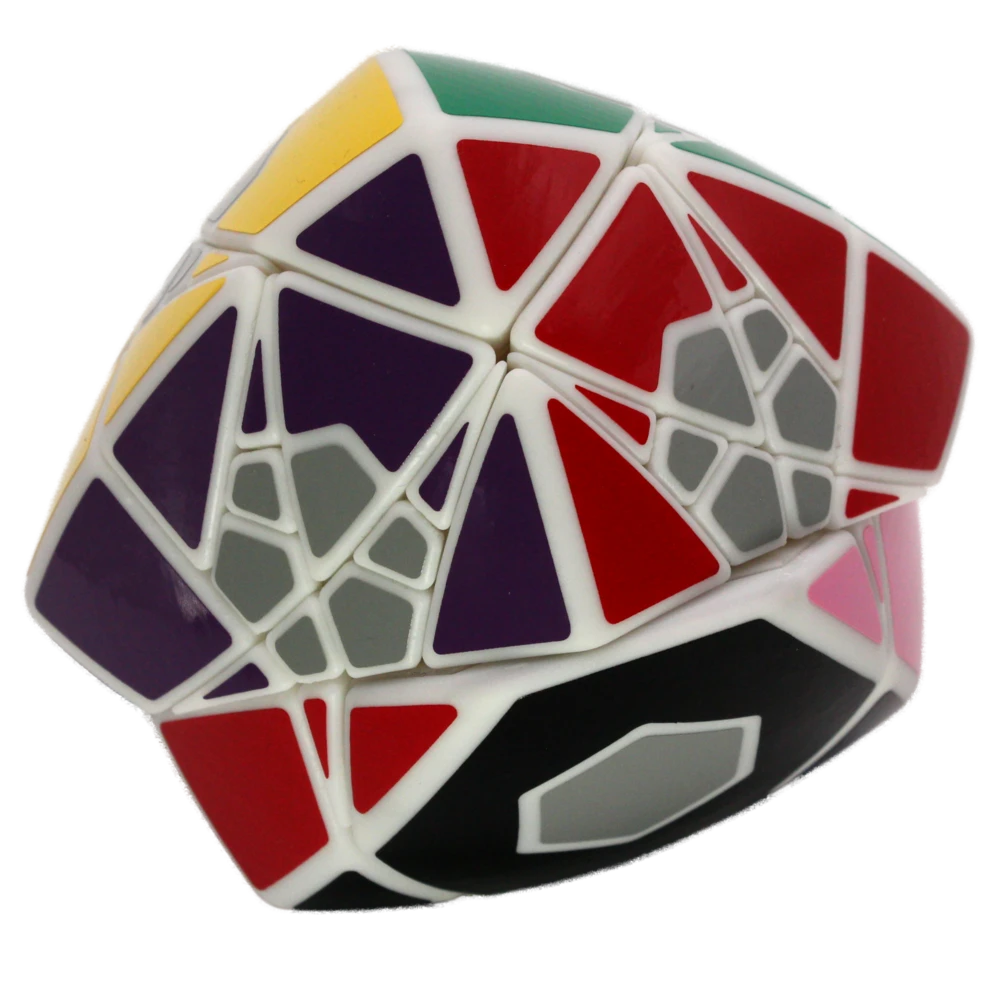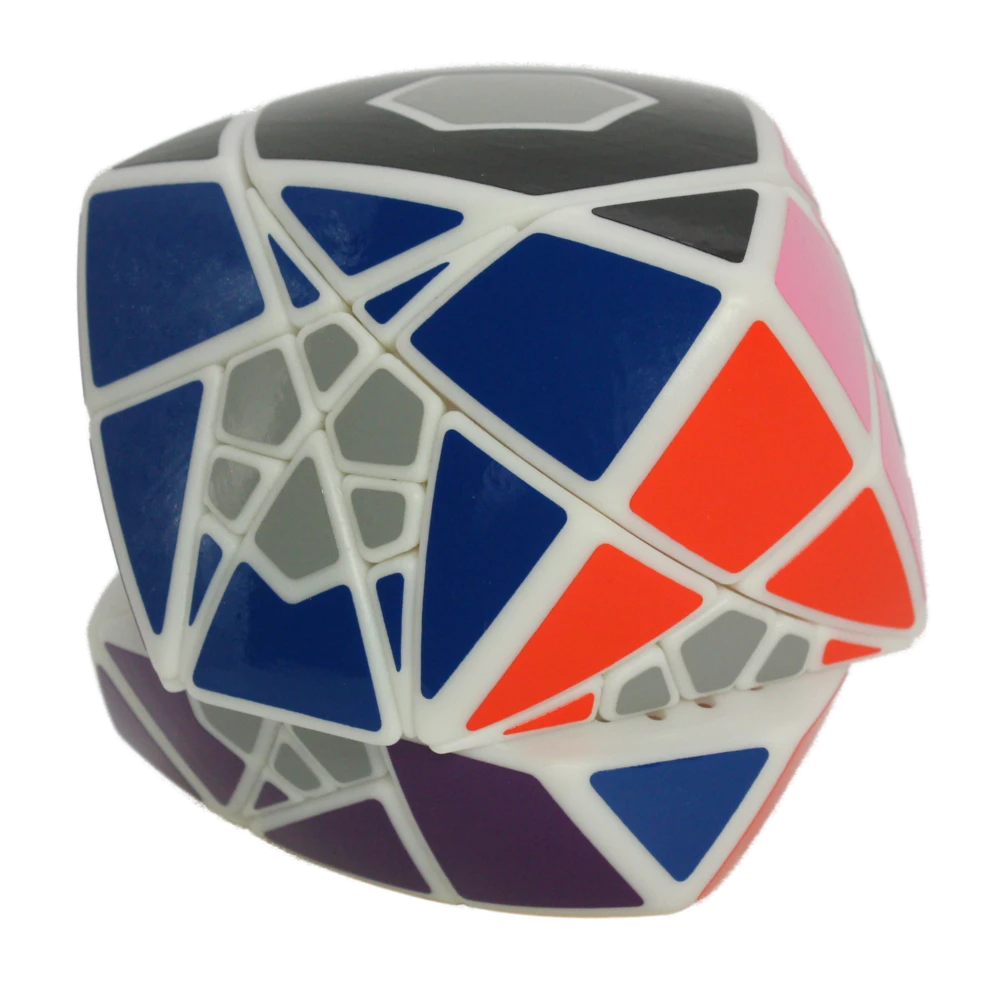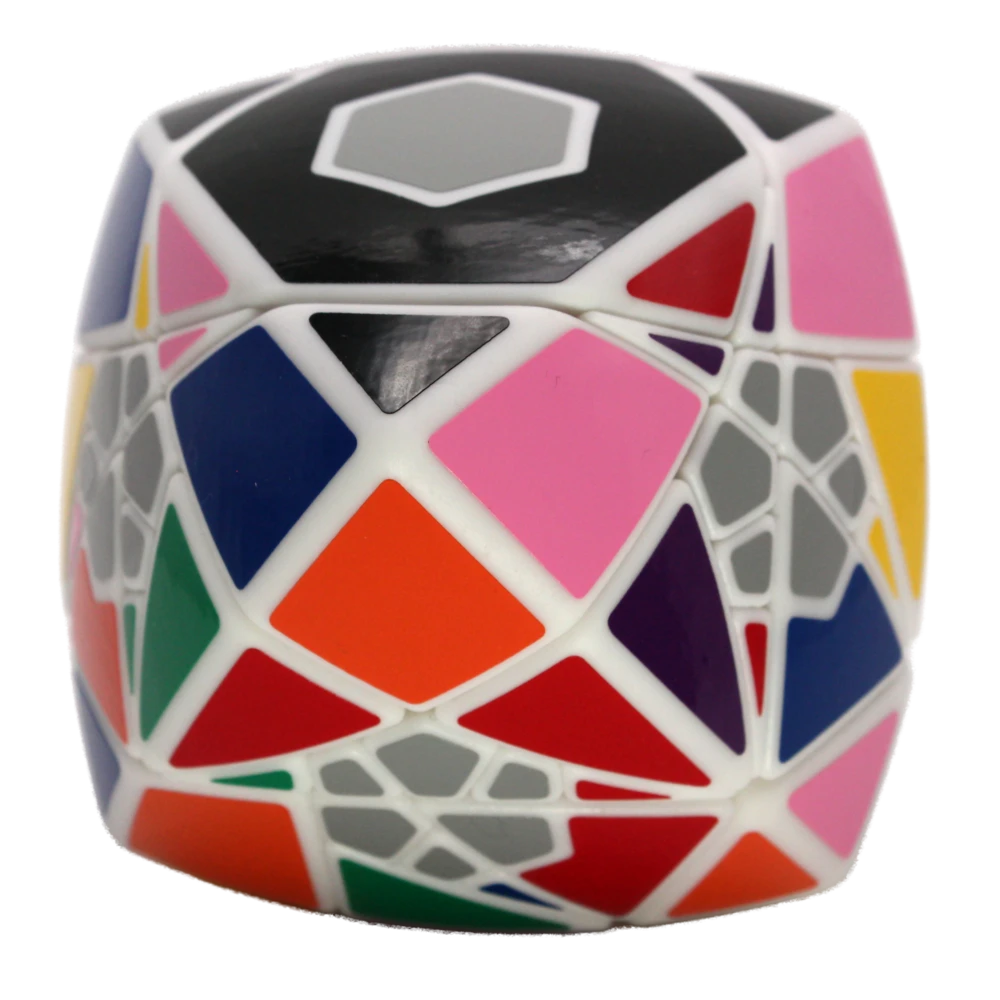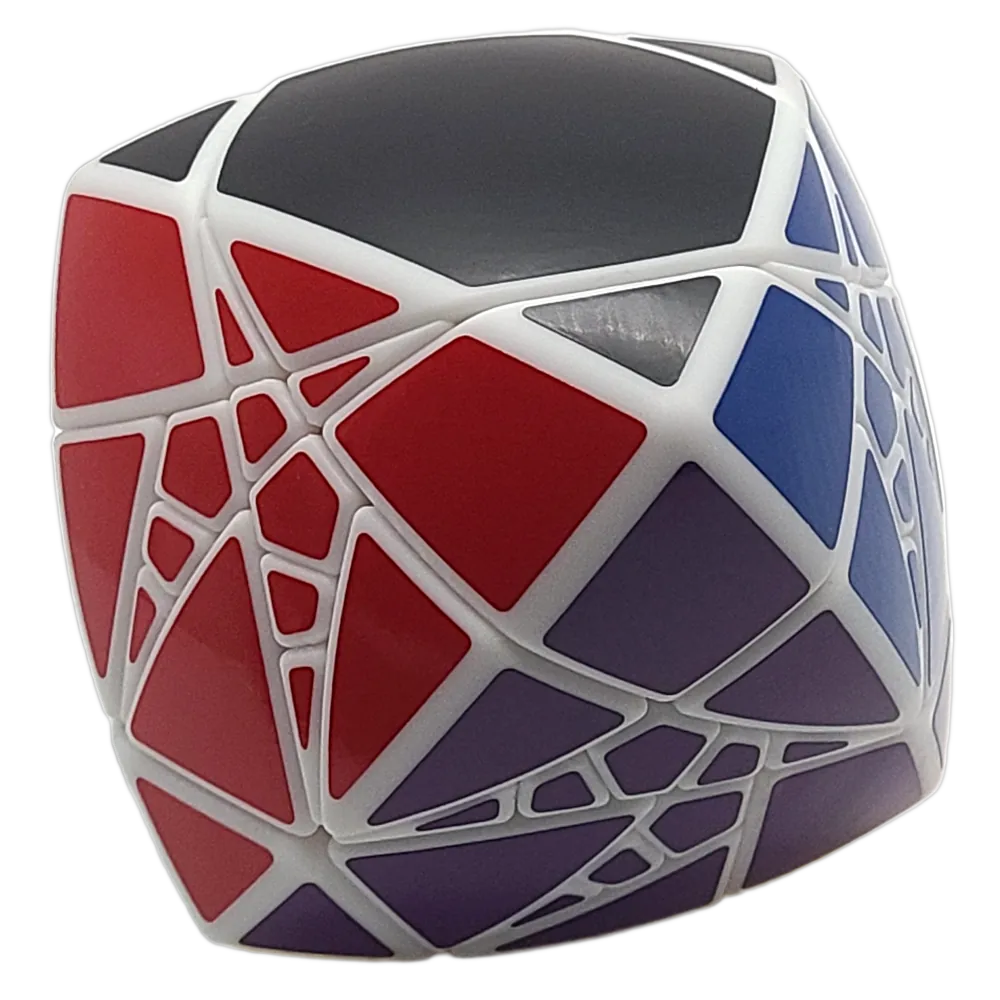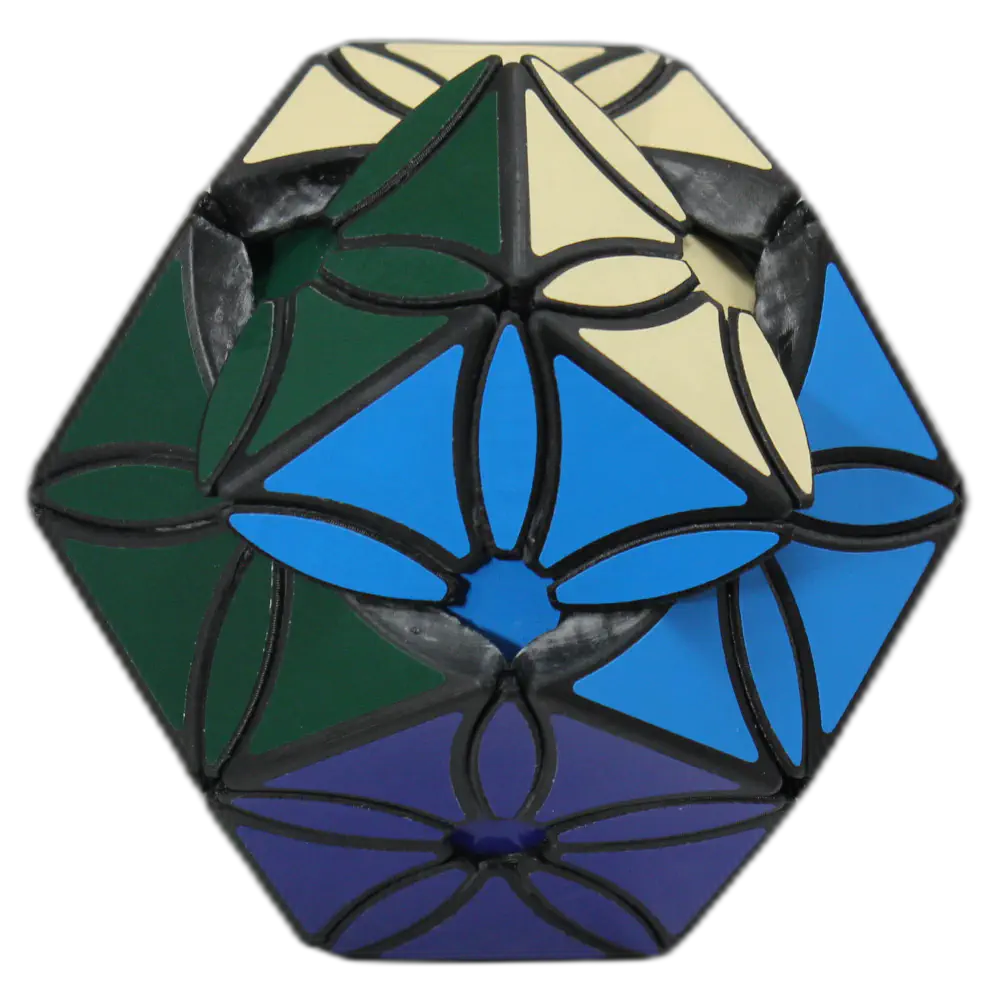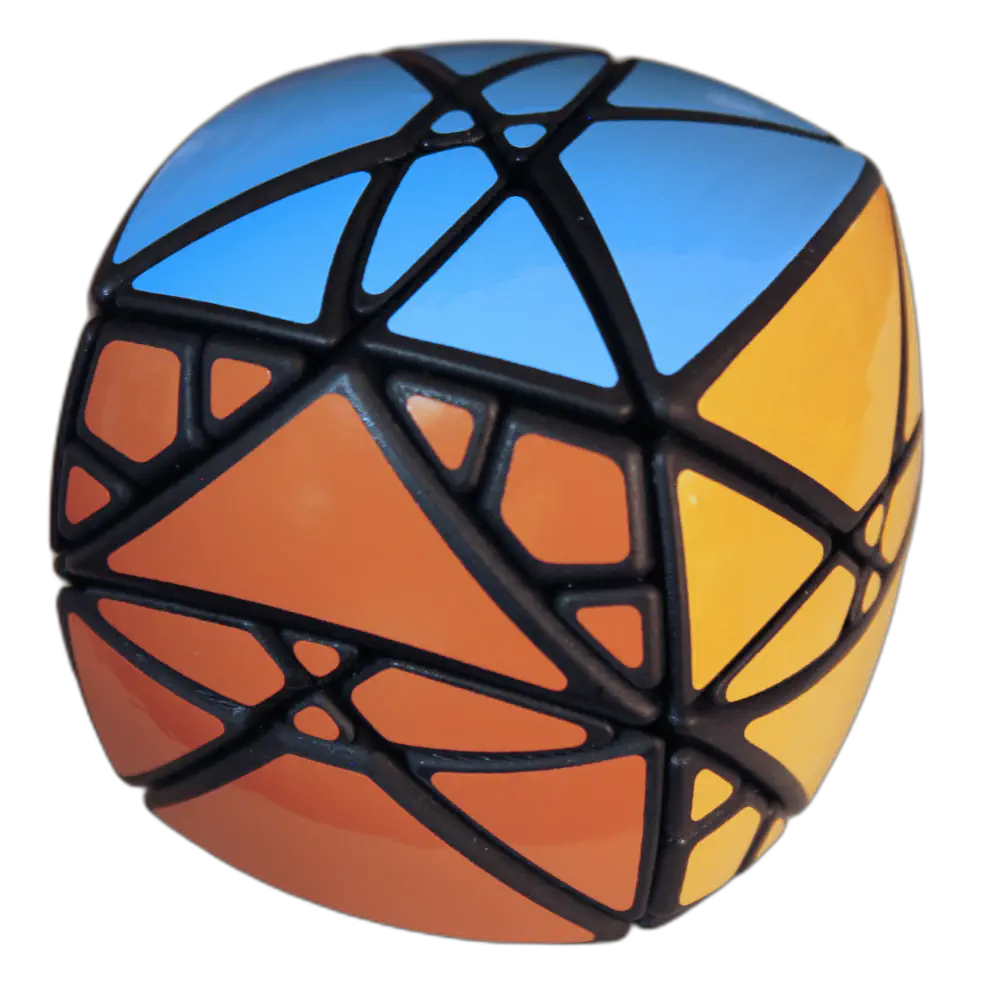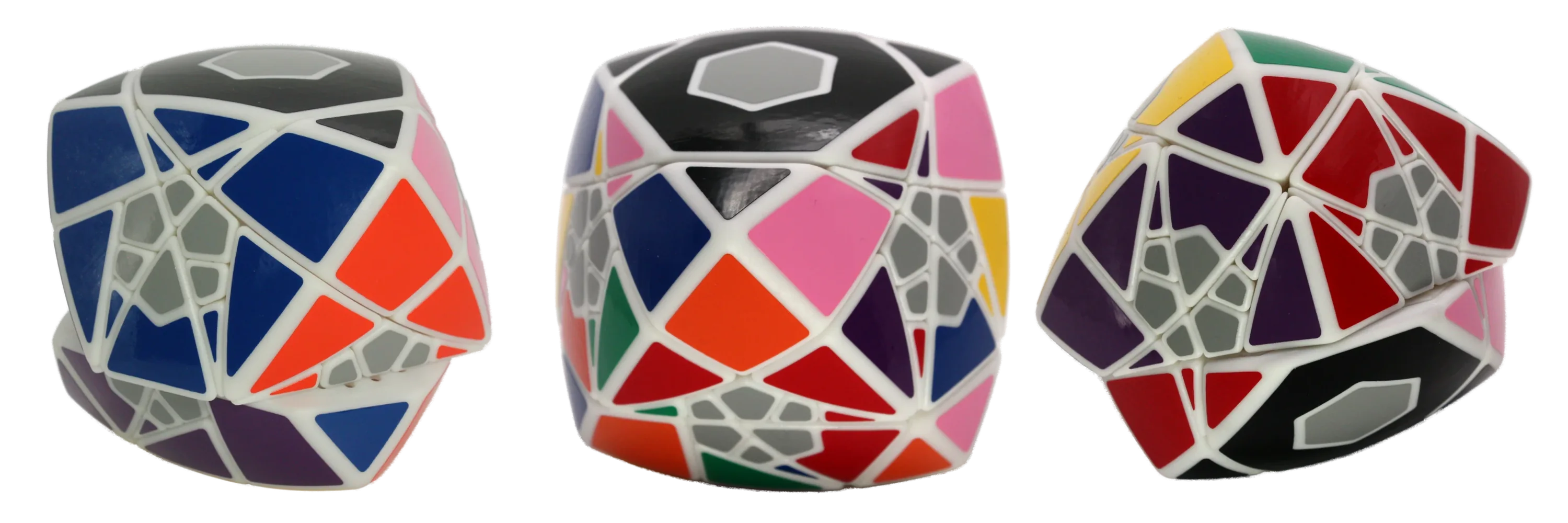
Video: https://www.youtube.com/watch?v=L3PB-1eoA3I
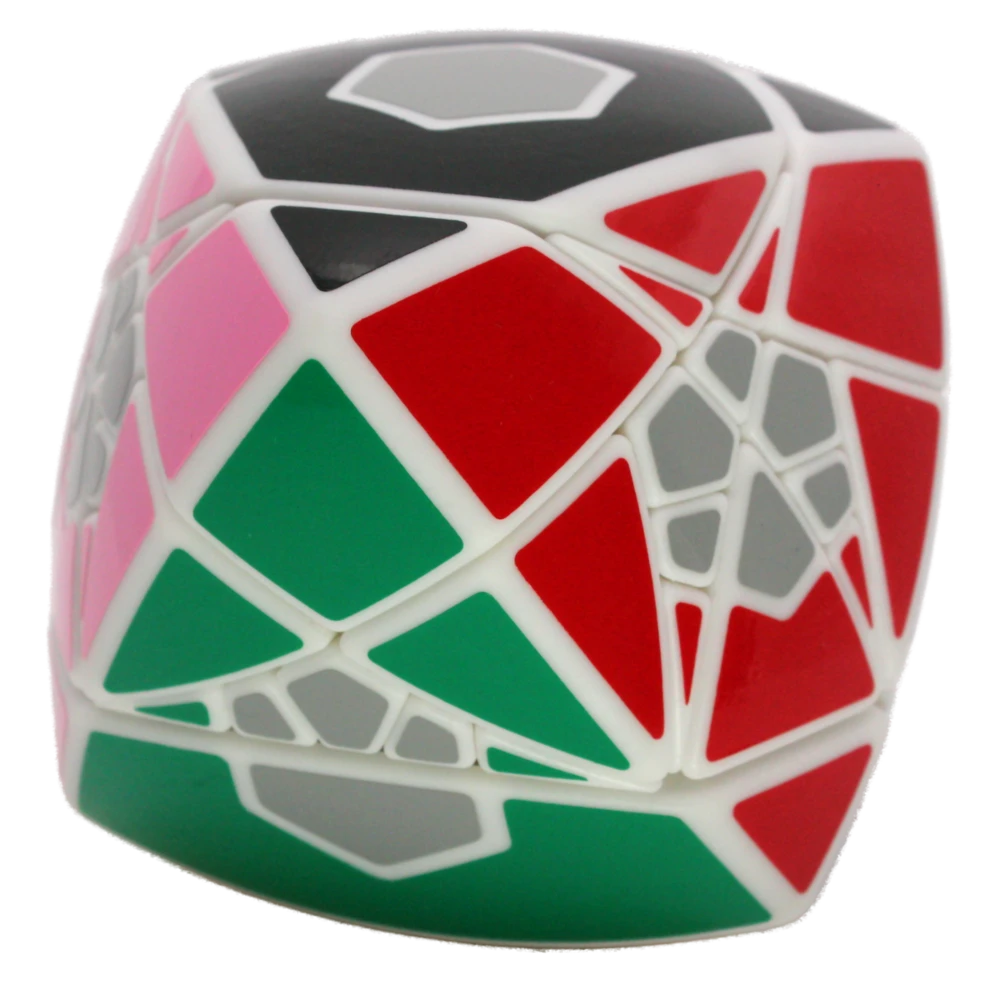
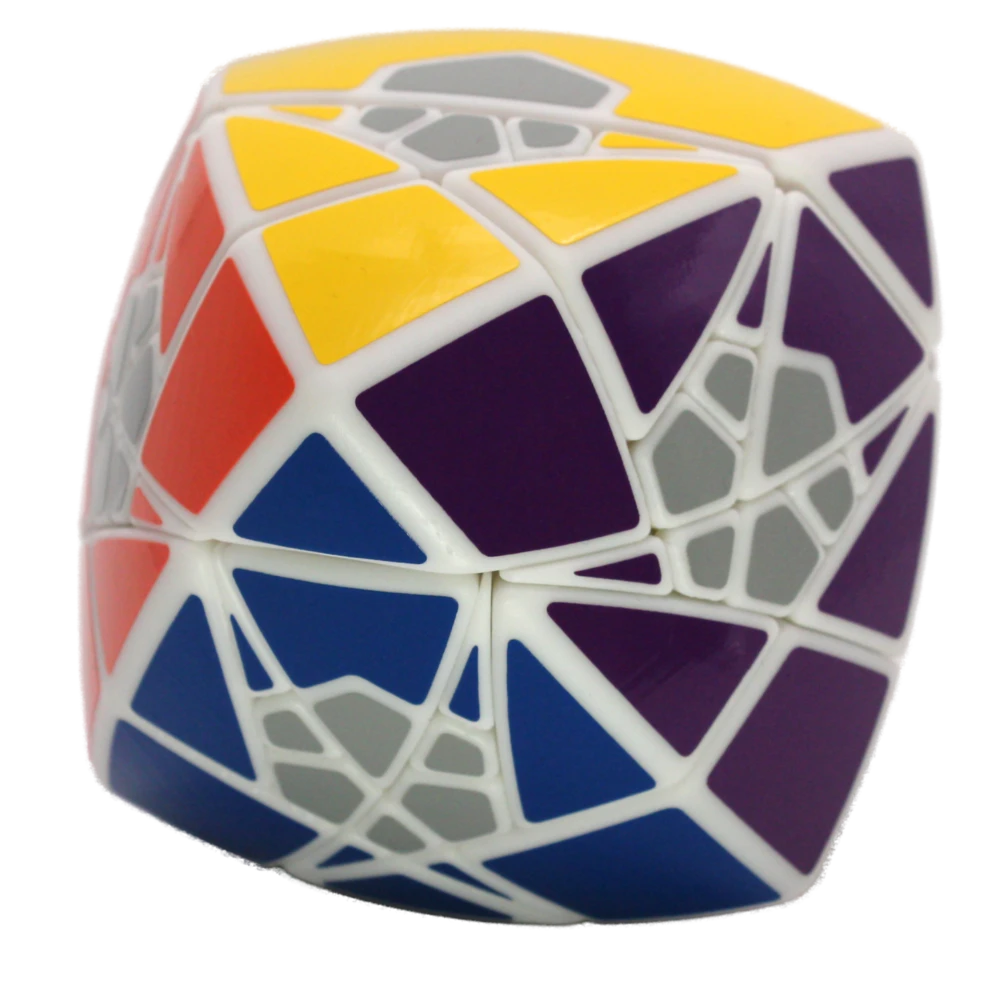
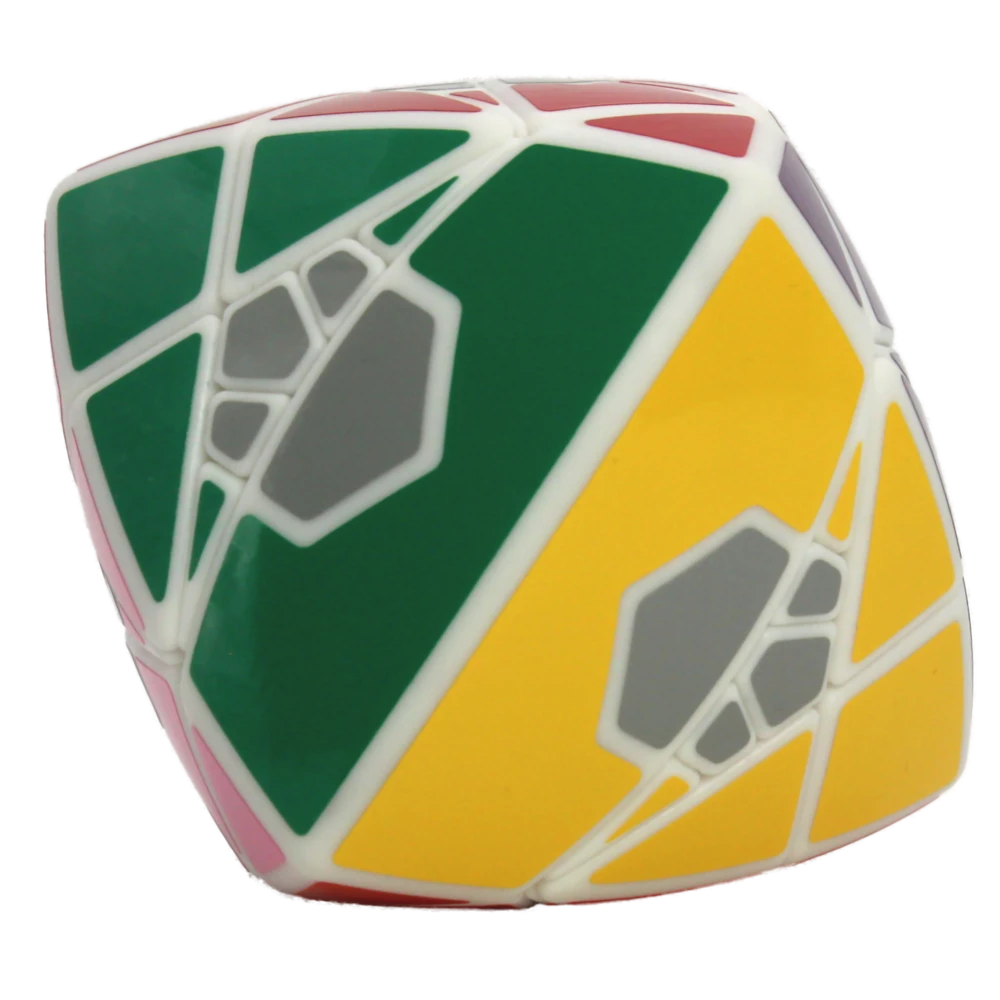
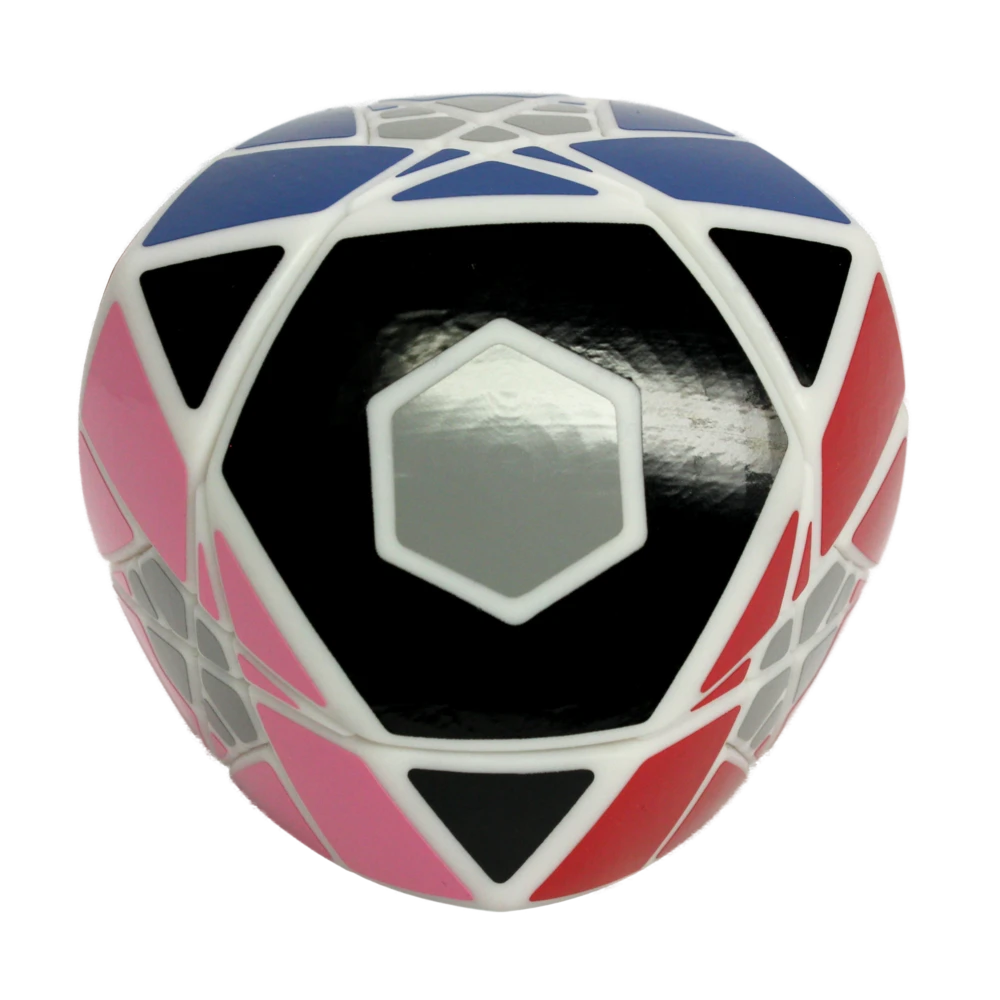
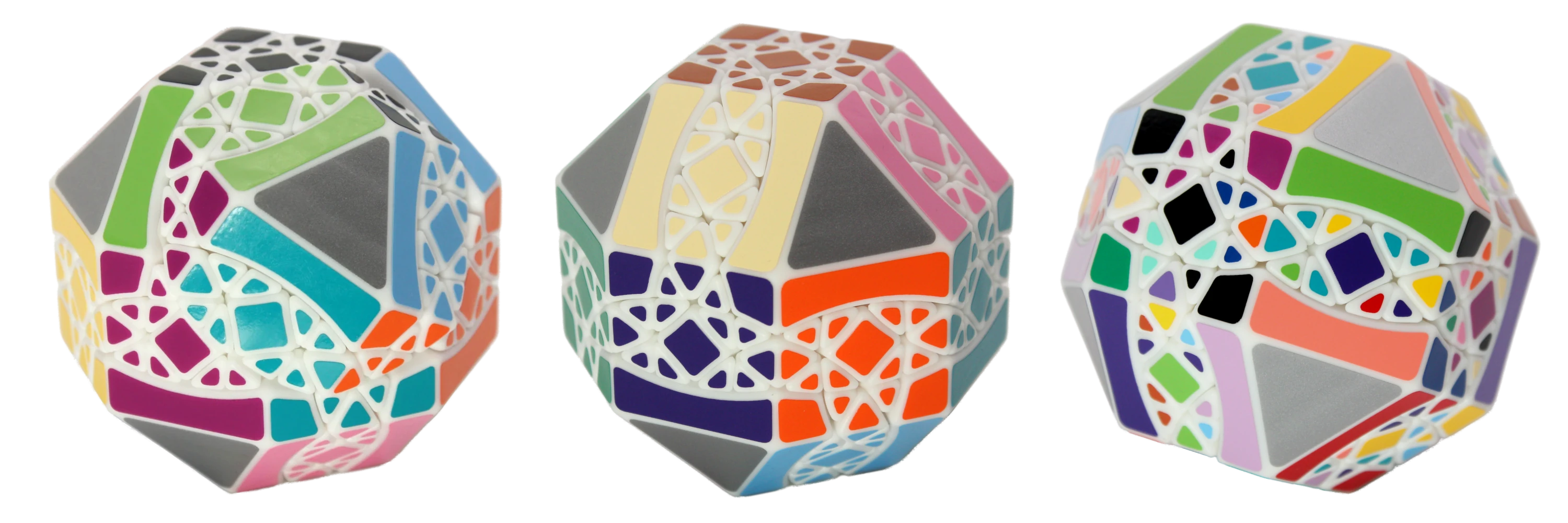
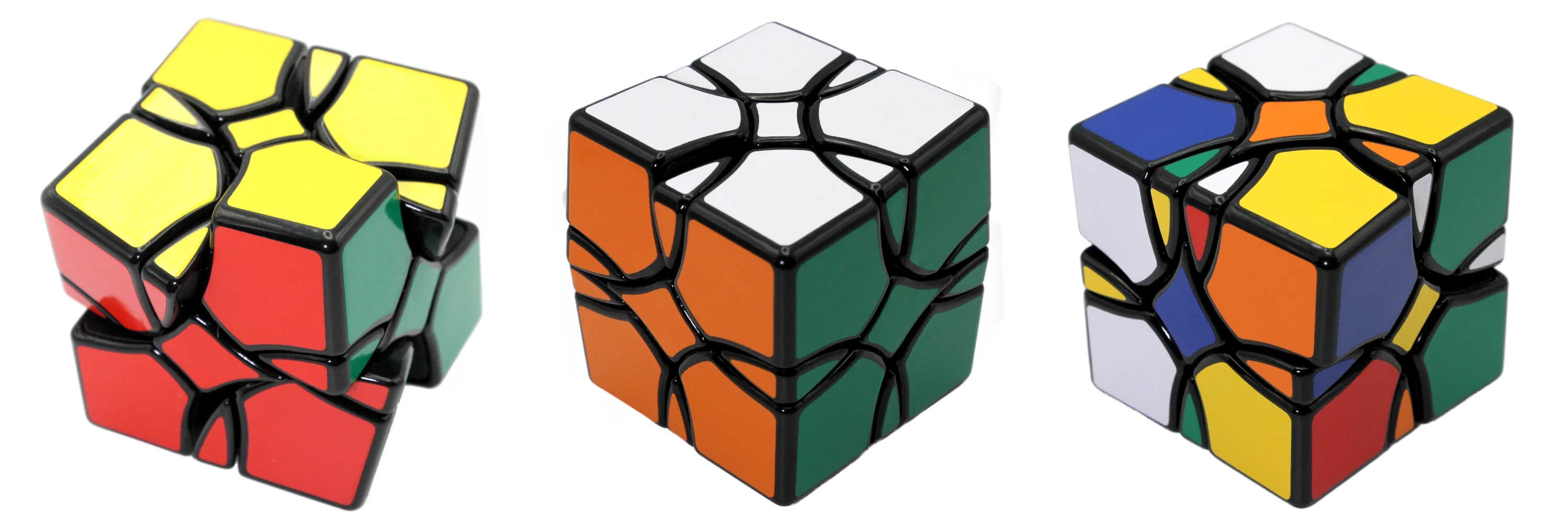
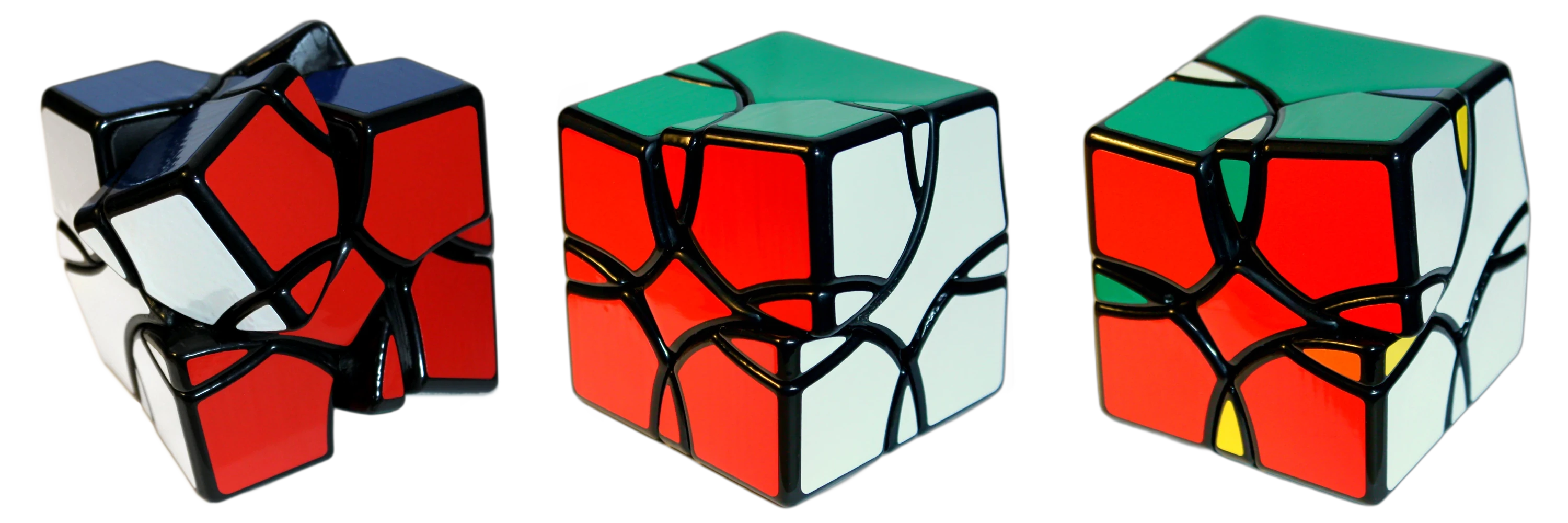
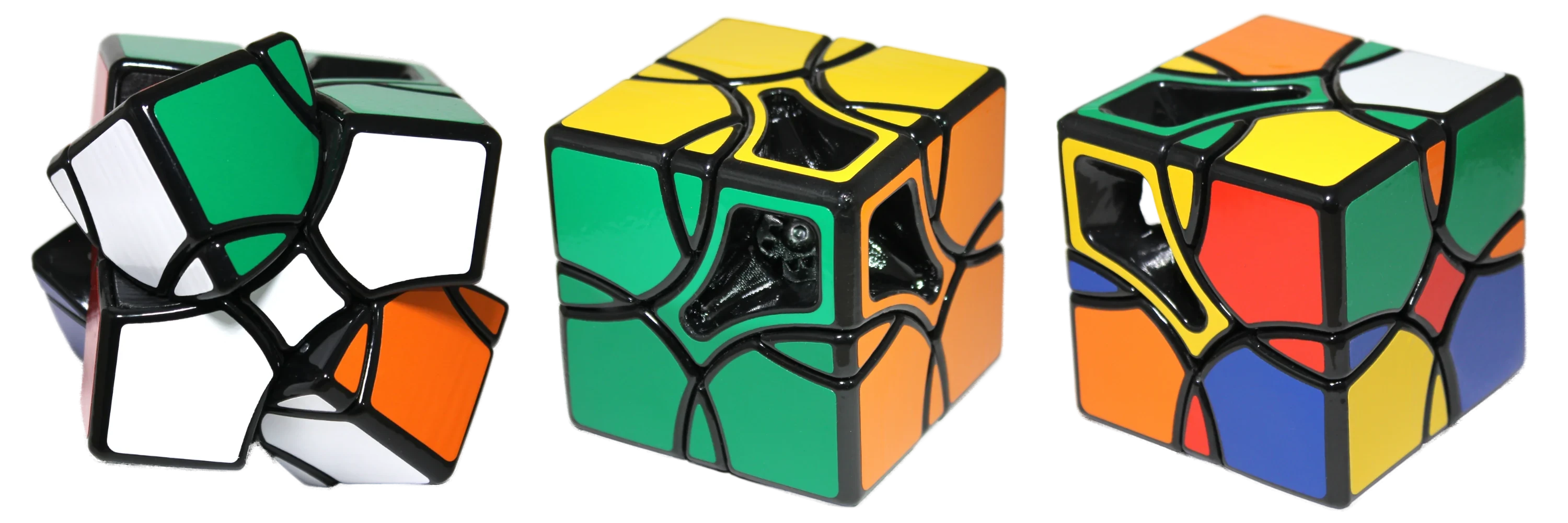
The Undectrix is a deeper-than-origin, two axis twisty puzzle with some interesting group theoretical properties. It is a doctrinaire puzzle formed by combining an octahedral edge and face cut at a depth of ~107°.
When I started exploring unusual groups in twisty puzzles I wanted to build something that satisfied these constraints:
- Inclusion of at least one ’new’ interesting group
- No gears or mechanical restrictions
- Similar solving difficulty to Trapentrix, the first known biaxe puzzle with exceptional properties
I finally found one that looked unique and feasible enough, thanks to recent discussion around Bram Cohen’s web-based puzzle explorer.

Group Theory
The most prominent group expressed by the Undectrix is PSL₂(11), over each set of 11 tiny triangle pieces. The two chiral orbits are perfect mirrors; when one orbit is solved the other must also be solved. Despite some triangles having duplicate colors, no indistinguishable positions are ever expressed. Solving this group is theoretically similar to solving the edges of the Crammed Cube.
Additionally, PGL₂(7) makes an appearance in the eight octahedral edge pieces. It is tied to the orientation of the green/yellow static edge, such that odd parities are expressed when it is inverted and even parities are expressed when it is solved.
The central pieces are stickered all grey to simplify the solve. If stickered, the kites and pentagons would express Alt(19) and Alt(12) respectively.
As stickered, the puzzle has 479,001,600 permutations.
Static face: 3
Static edge: 2
Octahedral edges: 336 (PGL₂(7)), divided by static edge
Octahedral corners: 4! (S₄), divided by static edge
Large isoceles triangles: 5! / 2 (Alt(5))
Small triangles: 660 (PSL₂(11))

3 × 2 × 60 × 24/2 × 336/2 × 660 = 479,001,600
Puzzle Theory
The existence of this cut geometry was noted in 2018 by William Kretschmer in this thread during a collaborative search for unusual groups in twisty puzzles.
Prior to playing with Bram’s puzzle explorer, I spent a great deal of time looking for these types of puzzles using a generator-first approach: pick a group, then find a generator for it that can be mushed onto two axes.

Looking at the generator graph for one of the PSL(2,11) orbits, it does not seem intuitive that these lines and triangles could be folded onto two axes! My analysis tools did not automatically find a solution for it despite having scanned it in the past.
There is a narrow range of cut angles where these PSL(2,11) orbits are able to exist on a physical puzzle. Octahedral geometry is the most natural way to place them, however they are not bound to this magic 144.74° axis angle; they will happily appear anywhere roughly in the [130, 160]° range before the resulting puzzle is deep enough to jumble.
The apparent blindspot in my generator-first search leads me to believe that a geometry-first approach is more likely to yield a comprehensive catalog of biaxe (and maybe triaxial) puzzles.
Stats
- Weight: 225 g
- Edge length: 82 mm (curved)
- Dist. between faces: 85 mm
- Reachable positions: 479,001,600
Video
Gallery