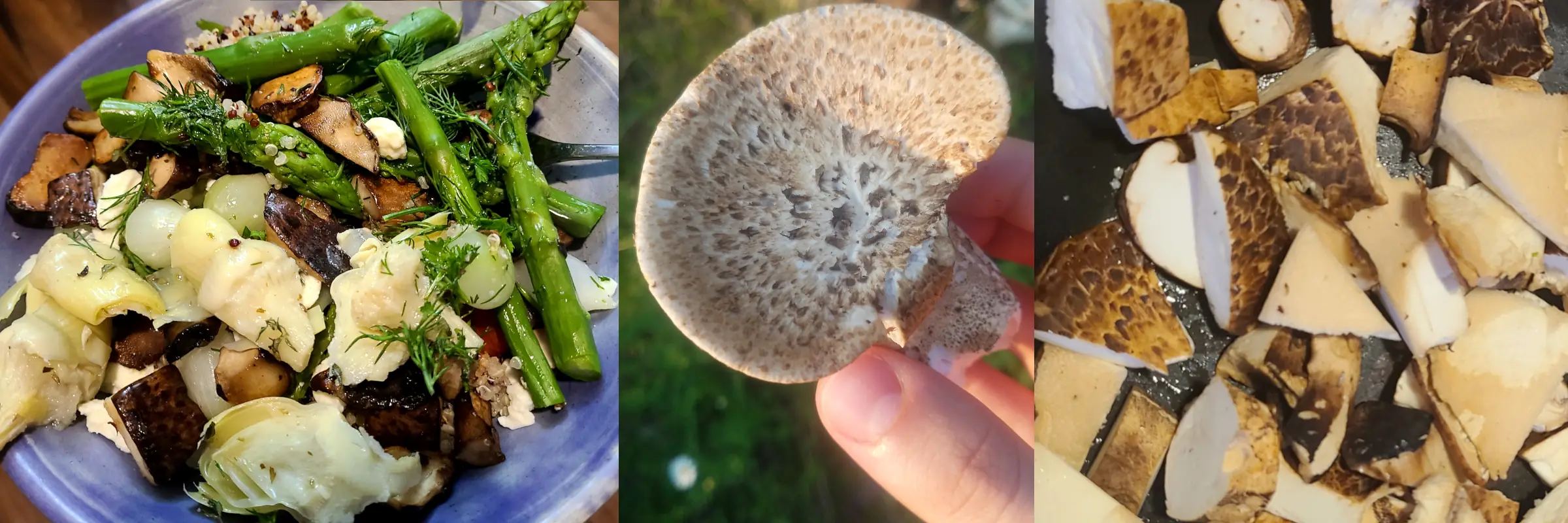
Caution - This page is for educational and entertainment purposes only. You should not eat wild mushrooms.
I have to undo an injustice.
Dryad’s Saddle (a.k.a. Pheasant Back) is the most hated mushroom on the internet (among U.S. foraging groups, at least). Sadly, it’s kinda the mushroom’s own fault. It starts appearing in the early spring, the same time foragers compete to gather their favorite backwoods delicacy, the great Morel. The Saddle’s abundance, flashy appearance, and nice aroma inevitably piques the interest of the beginner forager, but chances are the specimen that they choose to bring home will cook down into a soggy old hat in a puddle of butter. Its unfortunate seasonal timing, regional juxtaposition, and tight harvesting window have turned poor Cerioporus squamosus into a punchline for mushroom haters.
Behold a collage of Pheasant Back hate comments from the internet. Avert your eyes if you love them like I do.





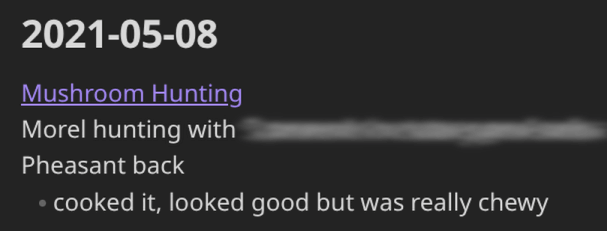

If all of this negativity stems from a lack of understanding, I hope this guide can help change that.
Flavor Profile
This mushroom has a unique flavor profile compared to most edible mushrooms. I’m no food critic but if I had to hastily sort a few into their logical categories…
| Basic Taste | Examples | Tasting Notes | Culinary Pairings |
|---|---|---|---|
| 1. Sweet | Chanterelle, Hedgehogs, Blewit | Honey, fruit, pepper‽ | Potatoes, cream, risotto, butter |
| 2. Savory | Portabello, Shaggy Mane, Porcini | u m a m i | Gravy, soup, onions |
| 3. Sour | Slippery Jack, Chicken fat mushroom | Pine sap | Pine-based dishes 🌲 |
| 4. Meaty | Morel, King Oyster, Maitake, CotW, most of them -.- | Meat💪 | Meats 🥩 |
| 5. Crisp | Dryad's Saddle | Cucumber, an ocean breeze ༄ | Feta, olive oil, artichokes, parsley |
…Dryad’s Saddle lands in a category of its own. It has some bite/crunch to it like asparagus, and a pleasant mild cucumbery bitterness. Perhaps understandably polarizing, but it could easily have more champions if the proper harvesting and preparation were better-known.
Well, hopefully that sells it for you. Before moving onto recipes, here are some tips to help you identify and harvest the perfect specimens.
Foraging Guidelines
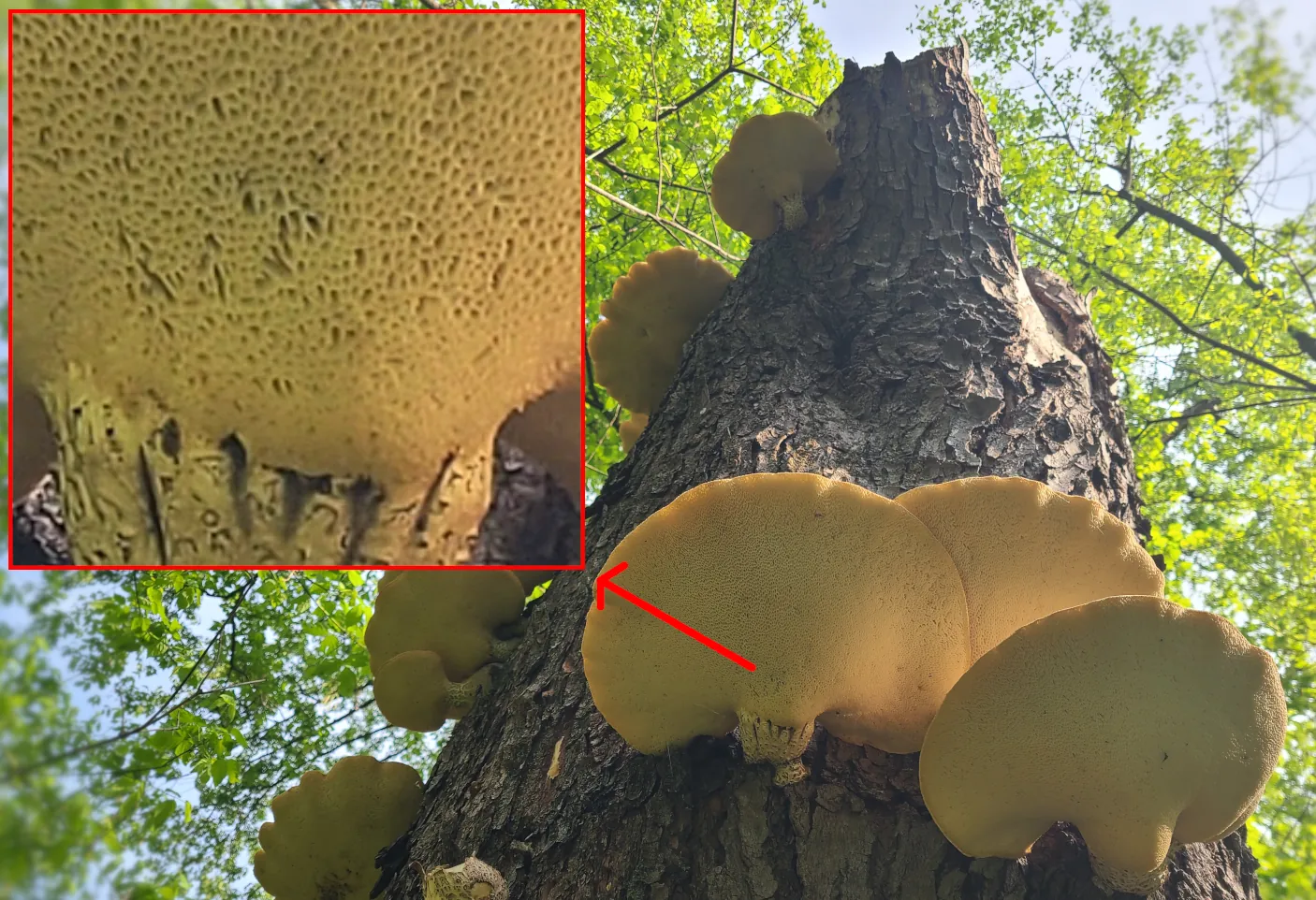
White rot fungus - You will mainly find Dryad’s Saddle in shelf-like arrangements on fallen logs. It will also occur on standing dead trees, and I frequently find it on live boxelder. You won’t find it on the forest floor.
Polypore mushroom - Cerioporus squamosus does not have gills – it has pores on the underside – do not confuse it with visually similar mushrooms like Sarcodon, Lentinus, Pholiota, or Turbinellus. These “lookalikes” have either gills, teeth, or ridges on the underside. An experienced forager has no trouble distinguishing them.
Cucumber / watermelon smell - They have a recognizable smell of cucumber or melon rind. This is a good identifier but it’s not exclusive to the Dryad’s Saddle.
Too tough to cut, too tough to eat - These mushrooms quickly turn leathery with age, and they are best picked within a week of appearing. I’d estimate that, from a random sampling, only 10% of specimens ought to even be considered for picking. A good specimen will have tiny pores, and the cap and stem will slice cleanly with a knife. Their size can vary greatly – small does not necessarily equate to young, but it’s a good enough rule of thumb.
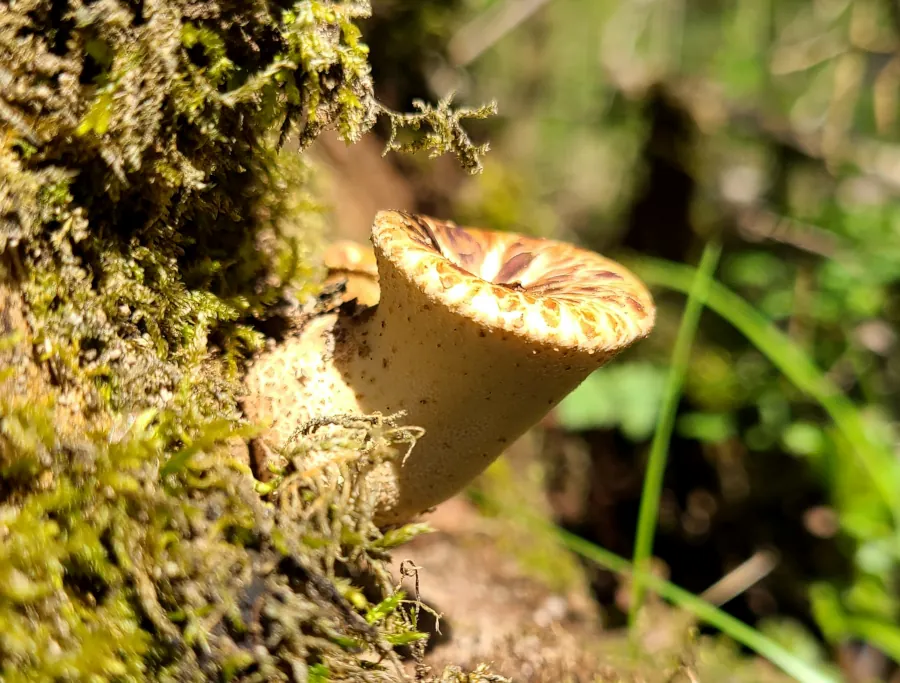
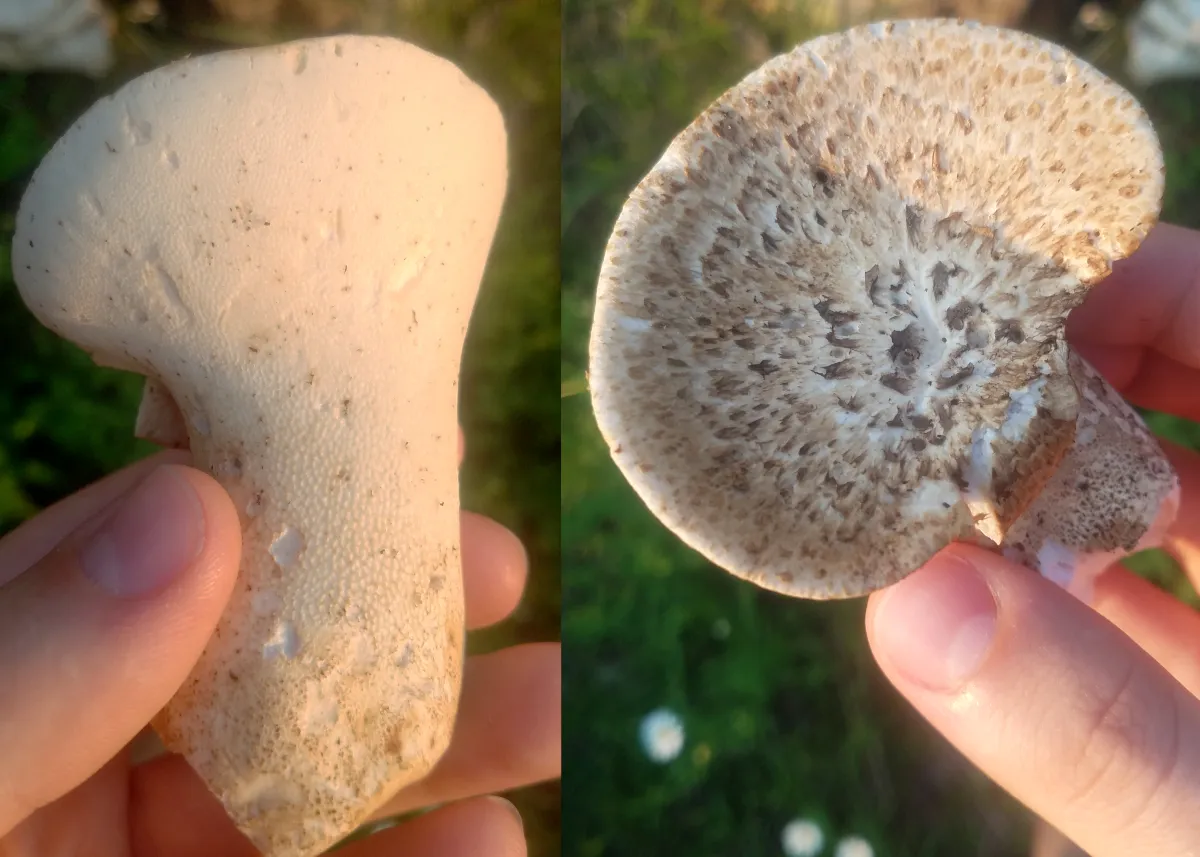
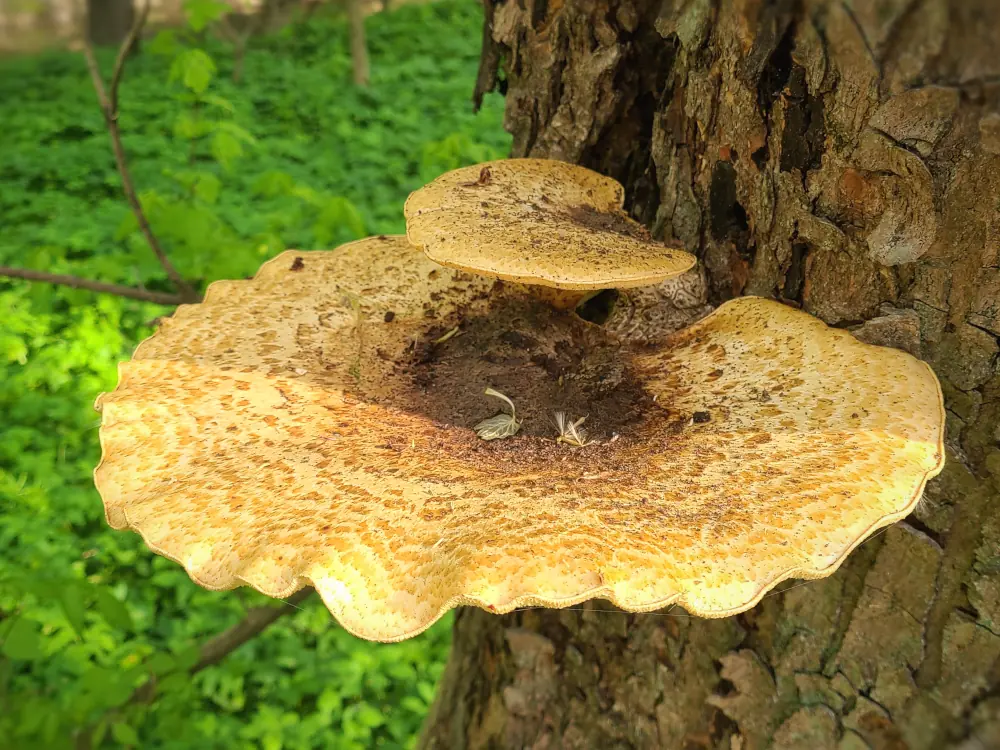
Don’t eat raw mushrooms unless you can identify a reliable, up-to-date research source confirming that it is without risk. Edibility ratings are generally intended for thoroughly cooked mushrooms, eaten by humans.
Cultivation
It’s worth noting that the most challenging aspect of this mushroom – its short harvesting window – is fully mitigated by indoor cultivation. A handful of people have successfully grown Dryad’s Saddle using techniques similar to commercial Maitake cultivation.
Recipes
A common complaint is that Dryad’s Saddle doesn’t pair well with anything. My personal take is that these mushrooms work perfectly in mediterranean-style cooking. Think olive oil before butter, artichokes and olives, fresh herbs, etc.
Here are some mostly-fleshed-out ideas… I’m more forager than chef:
Cleaning
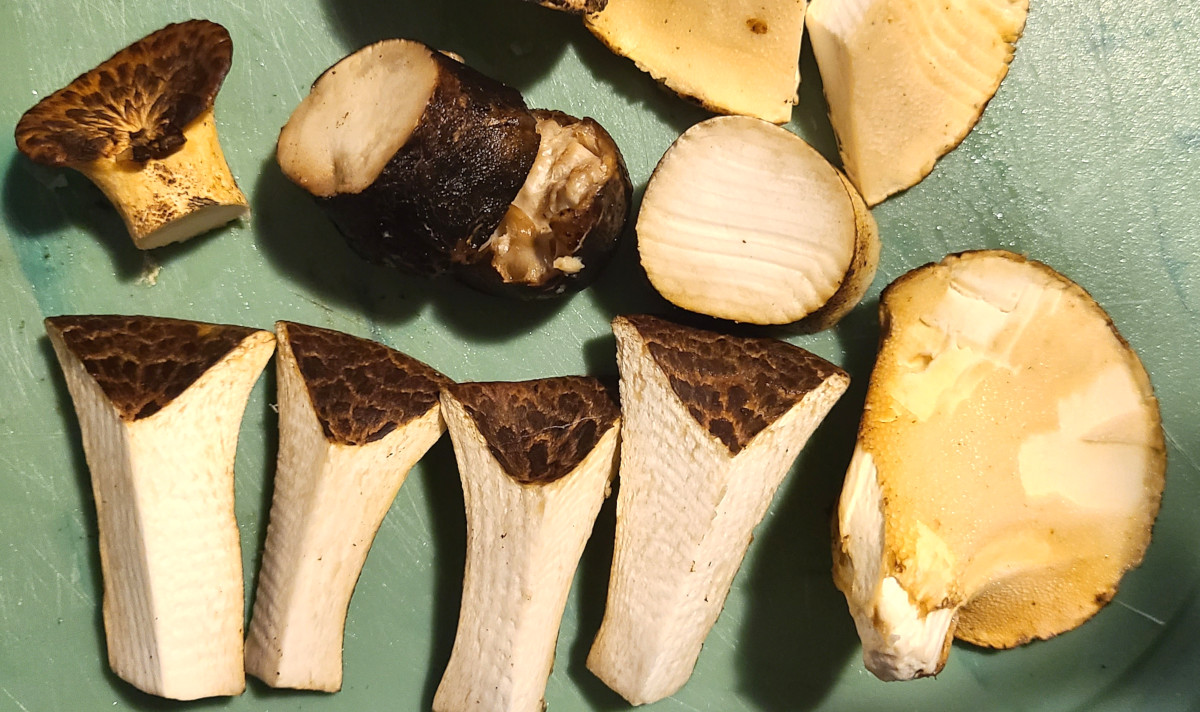
Compared to other polypore mushrooms, Dryad’s Saddle is super easy to clean.
- Lightly wash the mushrooms under running water to remove large dirt and debris.
- Use a knife to scrape off any visible dirt specks on the pore side. Cut off any tree matter.
- No need to scrape off the dark coating on the base of the stem – it’s part of the mushroom.
Generic Mushroom Sauté Steps
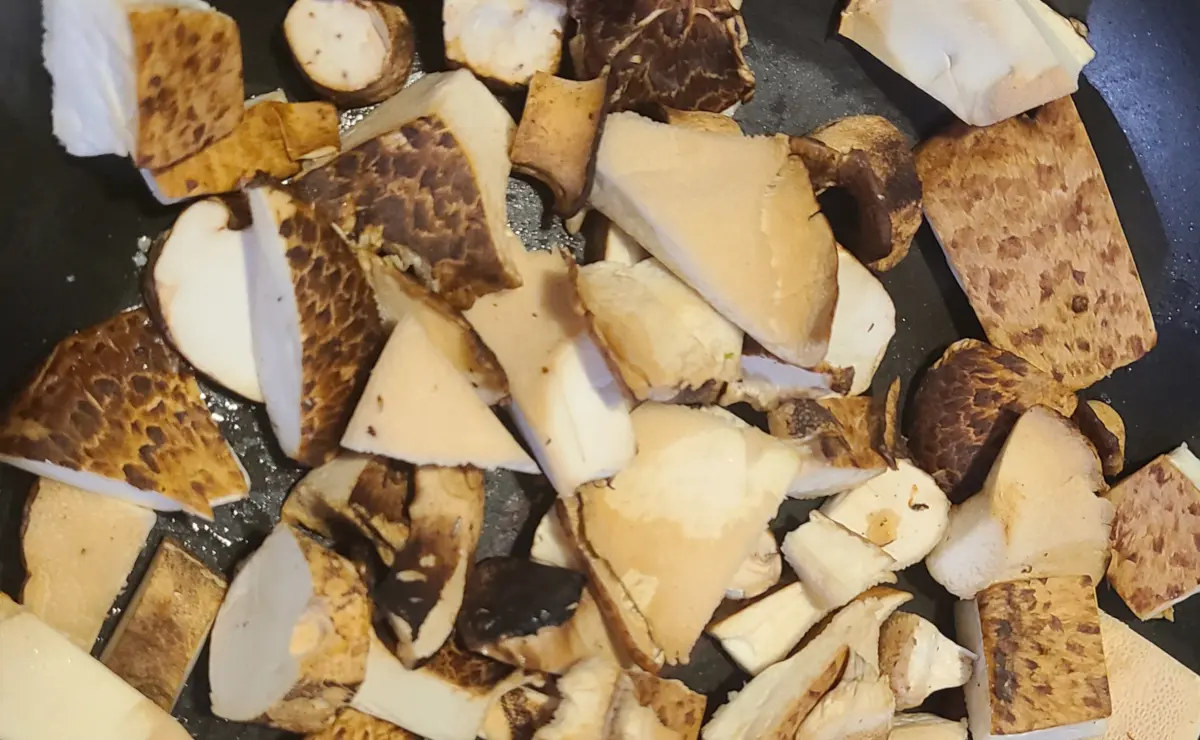
- Cut the mushrooms into slices and chunks no bigger than 2 inches (brackets and stems are both good). Discard any pieces that were difficult to cut through.
- Heat mushrooms in a pan on low-medium heat for ~10 minutes, with minimal oil if needed to prevent sticking, stirring occasionally.
- When the mushrooms have shrunken and the liquid is all-but-evaporated, immediately add olive oil and stir.
- Raise heat and flip occasionally for a couple more minutes and remove from heat.
Pheasant Back Stir Fry
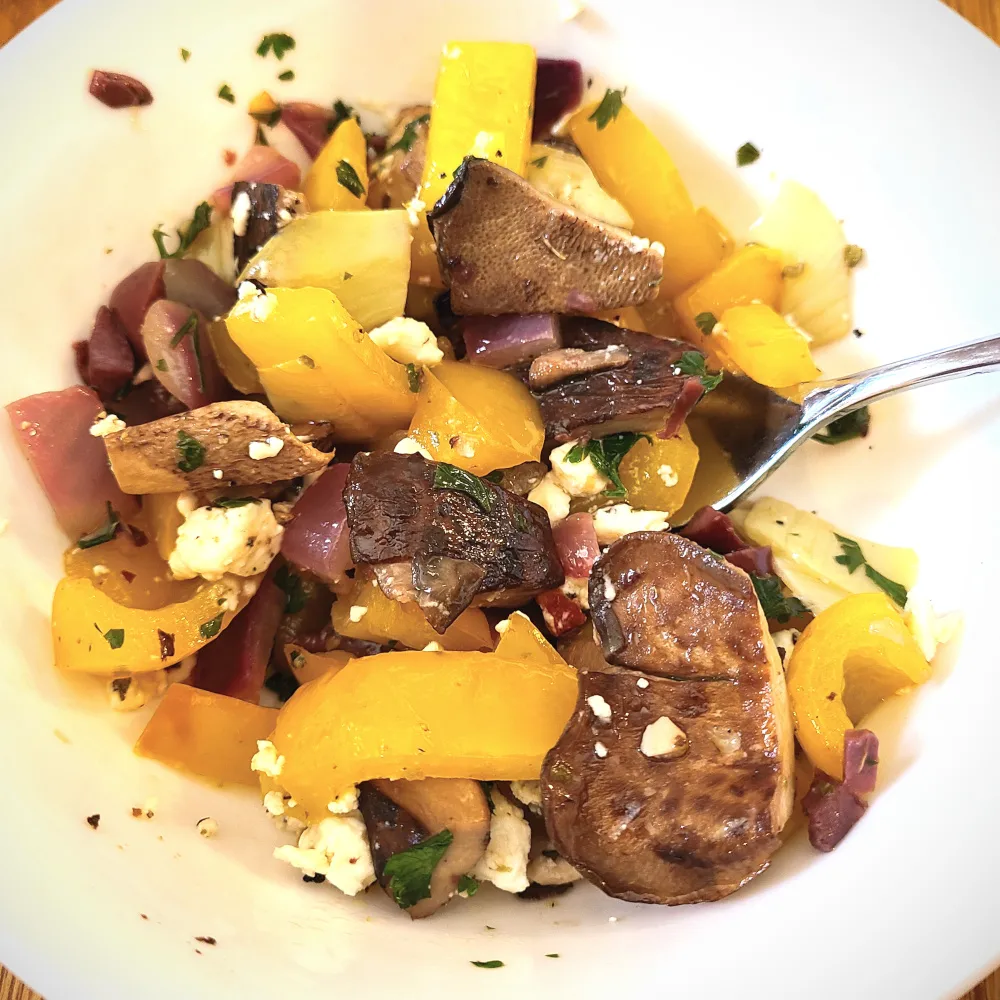
Serves: 4
Ingredients:
- 1 lb Pheasant Back mushrooms, cleaned and cut into 1-2" pieces
- 1 lb chicken, cubed (or double the mushrooms to keep it vegetarian)
- 1/2 medium red onion, thinly sliced
- 1 red bell pepper, thinly sliced
- 1 yellow bell pepper, thinly sliced
- 2 cloves garlic, minced
- 1/4 cup kalamata olives, pitted and finely chopped
- 1 cup cherry tomatoes, halved (optional)
- 1/4 cup fresh Italian parsley, chopped
- 1/8 cup fresh basil, chopped
- 1/4 cup crumbled feta cheese
- 1/4 cup olive oil
- 1 tbsp balsamic vinegar
- 2 tbsp lemon juice
- Salt and pepper, to taste
- 1 tsp dried oregano
- 1/2 tsp crushed red pepper flakes (optional)
Instructions:
- Heat a large wok or skillet over medium-high heat. Add 2 tablespoons of olive oil and wait for it to heat up.
- Add the cubed chicken, season with salt and pepper, and cook until browned and cooked through. Remove from the wok and set aside.
- In the same wok, cook the sliced mushrooms according to the generic mushroom sauté steps. Remove from the wok and set aside with the cooked chicken.
- Add the sliced red onion, and bell peppers to the wok, and cook for about 5 minutes, until softened but still slightly crunchy.
- Add the minced garlic and cook for another 1-2 minutes, until fragrant.
- Return the cooked chicken and mushrooms to the wok, along with the cherry tomatoes, kalamata olives, balsamic vinegar, lemon juice, dried oregano, parsley, and crushed red pepper flakes. Stir well and cook for 2-3 minutes, allowing the flavors to meld.
- Adjust salt and pepper to taste.
- Remove from heat and stir in parsley and basil.
- Transfer to a serving dish and sprinkle with crumbled feta cheese.
Pheasant Back & Asparagus Grain Bowl
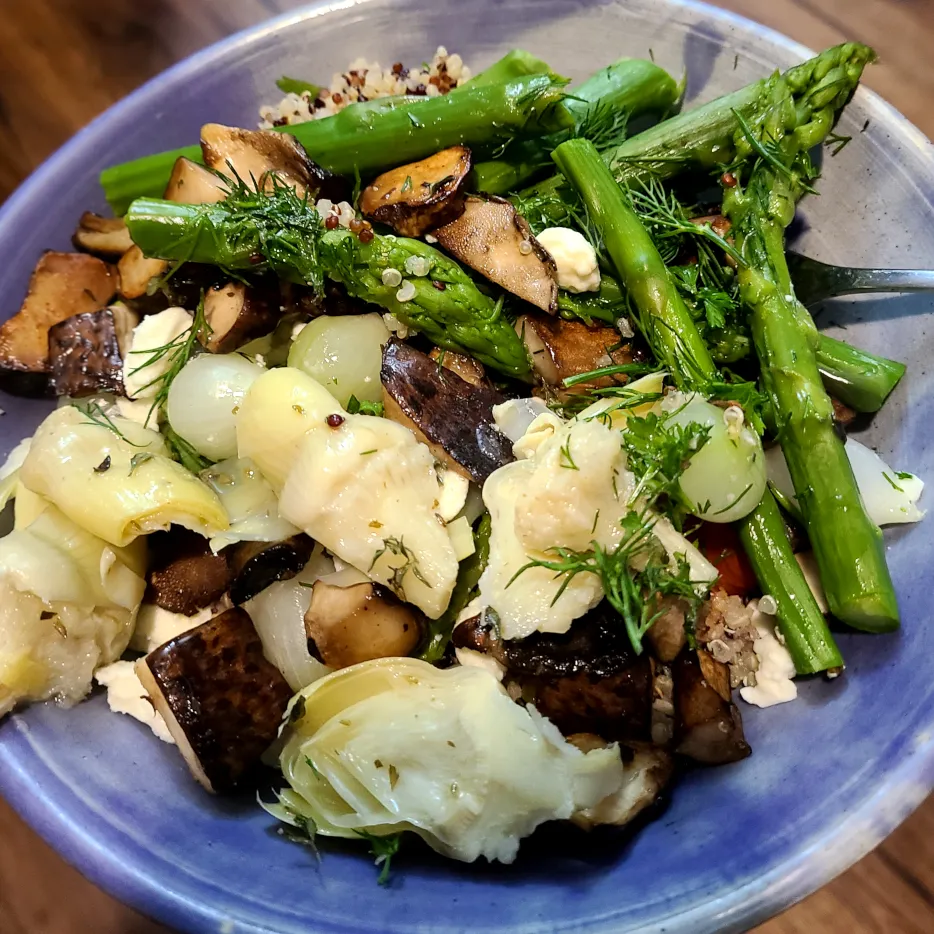
Serves: 2-3
Ingredients:
- 3/4 lb Pheasant Back mushrooms, cleaned and cut into 1-2" pieces
- 1 cup dry quinoa
- 3/4 lb asparagus, trimmed and cut into 3-inch pieces
- 10 pearl or cocktail onions (or a chopped shallot)
- 3 cloves garlic, minced
- 1/2 cup marinated artichoke hearts in oil, drained and quartered
- 1/4 cup fresh dill, chopped
- 1/4 cup fresh parsley, chopped (optional)
- 1/3 cup crumbled feta cheese
- 3 tbsp olive oil (for cooking)
- Salt and pepper, to taste
Lemon Dijon Vinaigrette:
- 1/4 cup fresh lemon juice
- 1/4 cup extra virgin olive oil
- 1 tbsp Dijon mustard
- 1 tbsp honey
- 1/4 tsp black pepper
- 1/4 tsp salt
Instructions:
- Cook the quinoa according to package directions (typically 1 cup quinoa to 2 cups water, brought to a boil then simmered covered for 15 minutes).
- While the quinoa cooks, prepare the mushrooms following the generic mushroom sauté steps. Remove from pan and set aside.
- Bring a pot of water to a boil. Add the asparagus and blanch for 2 minutes until bright green and tender-crisp. Strain out and set aside.
- Add the pearl onions to the same pot and boil for 1-2 minutes until the skins loosen. Drain, rinse with cold water, and peel off the skins. Cut in half if preferred.
- In the same pan used for mushrooms, add 1 tablespoon olive oil over medium heat. Add the blanched onions cooking for 2 minutes, then add the minced garlic and cook for another minute until fragrant.
- Add the cooked mushrooms, blanched asparagus, and artichoke hearts to the pan with the onions and garlic. Stir and cook for 2-3 minutes to combine flavors. Season with salt and pepper.
- Make the vinaigrette: Add lemon juice, olive oil, Dijon mustard, honey, pepper, and salt to a mason jar. Seal tightly and shake vigorously for 30 seconds until emulsified.
- To assemble: Divide quinoa among serving bowls. Top with the mushroom-artichoke-asparagus mixture, fresh dill, parsley (if using), and crumbled feta cheese.
- Drizzle with the vinaigrette and serve warm.
Pheasant Back Salad
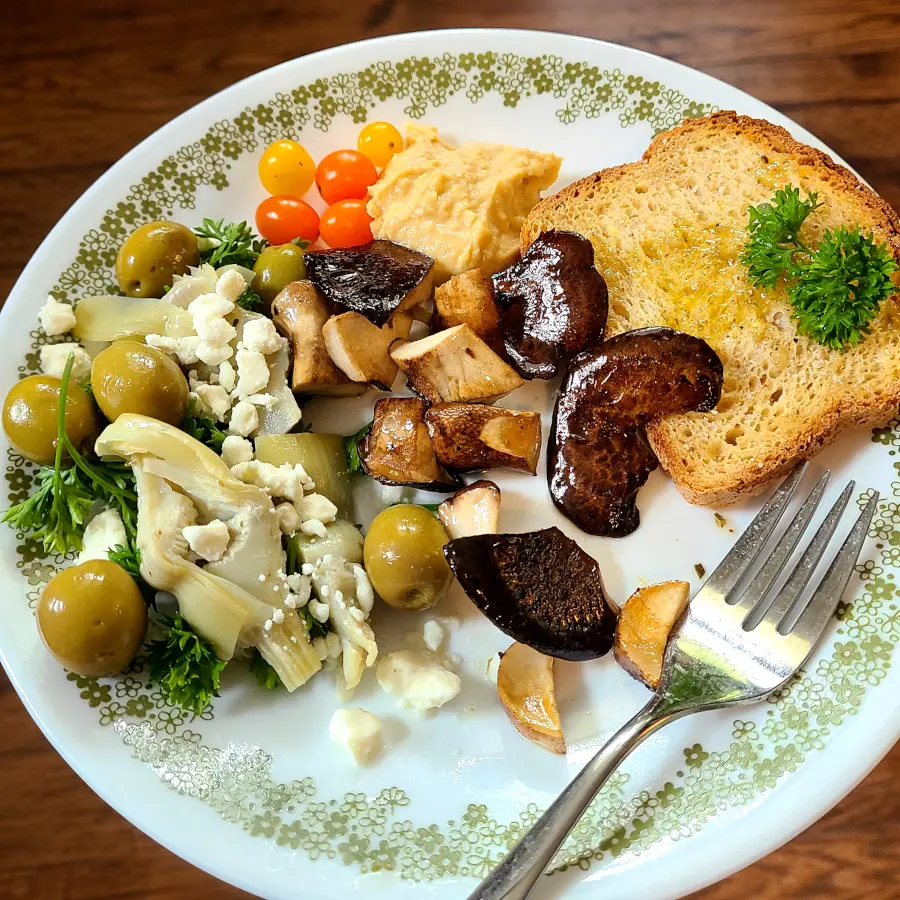
Serves: It’s a salad, choose your own adventure.
Ingredients:
- Pheasant Back mushrooms, cleaned and cut into 1-2" pieces
- Salad greens (suggestions: romaine, spinach, parsley)
- Feta cheese crumble
- Tiny tomatoes
- Cucumber, diced (optional)
- Olives
- Artichokes
- Olive oil and lemon for dressing, or leftover vinagrette from last recipe
- Hummus for serving
- A slice of garlic toast
Instructions:
- Prepare the mushrooms per the generic mushroom sauté steps and let them cool.
- Chop the greens into a salad bowl.
- Add the mushrooms, tomatoes, olives, cucumber, and artichokes to the bowl.
- Dress with olive oil and lemon (or vinagrette), and crumbled feta cheese.
- Serve with a dab of hummus and a slice of garlic toast.